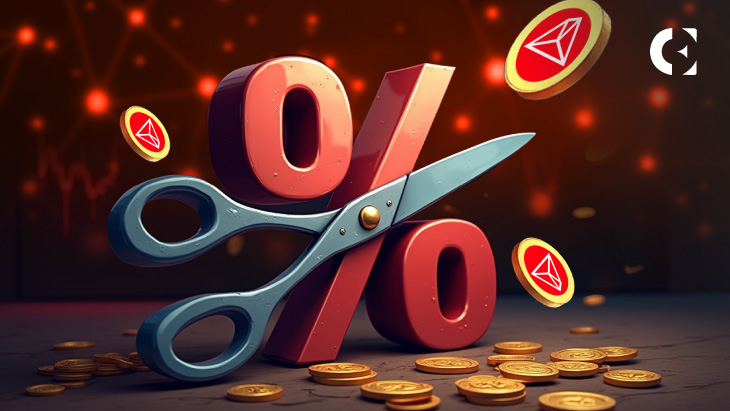
The Tron blockchain (TRX) has just made one of its most significant moves in recent years by officially reducing gas fees by 60%, a decision designed to strengthen network speed, scalability, and adoption. This landmark change comes at a time when the entire crypto industry is grappling with the challenges of high fees, network congestion, and the urgent need for scalable infrastructure. By slashing transaction costs while simultaneously enhancing performance, Tron has positioned itself as one of the most competitive blockchains in the market.
Gas fees are a critical component of blockchain networks. They represent the cost users pay to execute transactions or run smart contracts. On major platforms like Ethereum, gas fees have often been criticized for skyrocketing during peak demand, sometimes costing more than the actual value of the transaction. Such inefficiencies have limited mainstream adoption, particularly for microtransactions and decentralized applications (dApps) that rely on affordable and frequent interactions. Tron’s decision to reduce fees by such a large margin directly tackles these barriers, signaling a clear mission: make blockchain affordable and accessible to all.
According to Tron’s development team, this reduction was achieved through optimizations in the Tron Virtual Machine (TVM) and network consensus mechanisms. These upgrades have allowed the blockchain to process transactions more efficiently without sacrificing speed or security. In fact, analysts believe that the improvements could make Tron one of the fastest and most cost-effective platforms in the crypto world, enhancing its appeal to developers, enterprises, and end users alike.
The timing of this move is particularly strategic. With the explosive growth of decentralized finance (DeFi), NFTs, and stablecoins, demand for efficient, low-cost blockchains has never been higher. Ethereum, despite being the dominant smart contract platform, continues to face criticism for high transaction costs, even with scaling solutions like layer-2 rollups. Binance Smart Chain offers lower fees but faces ongoing concerns about centralization. Tron, by cutting its fees while maintaining decentralization and scalability, now stands as a serious alternative for projects and users looking for balance.

One of the biggest beneficiaries of this change could be stablecoin transactions. Tron is already the leading blockchain for Tether (USDT), handling billions of dollars in daily transfers. By reducing fees by 60%, Tron makes USDT transactions even more attractive, especially for users in regions where remittances and cross-border payments are vital. Lower fees translate to real-world savings for individuals and businesses sending money globally. This strengthens Tron’s reputation as the backbone of affordable, high-volume financial transactions.
The impact extends beyond stablecoins. For dApp developers, the new fee structure eliminates one of the main barriers to building on Tron. Lower operational costs mean more room for innovation and profitability. DeFi protocols that rely on frequent smart contract executions will find Tron particularly appealing, as reduced costs improve user experience and increase participation. Similarly, the NFT sector—which has faced criticism for high minting and trading fees on Ethereum—could see a surge of activity on Tron as creators and collectors seek more affordable options.
Community reactions have been overwhelmingly positive. On social media, users praised Tron’s leadership for addressing one of the industry’s biggest pain points. Developers expressed optimism about launching new projects on Tron, and many analysts noted that the move could drive a new wave of adoption. Justin Sun, founder of Tron, reinforced this sentiment by declaring that the blockchain’s mission has always been to deliver “affordable, scalable, and efficient” solutions for global users.

From a market perspective, the reduction in gas fees could also influence the trajectory of TRX, Tron’s native token. While lower fees mean less TRX is required per transaction, the expected increase in transaction volume could offset this, leading to higher overall demand. If Tron successfully attracts more dApps, DeFi protocols, and enterprise applications, TRX could experience significant growth in utility and market value. Investors are already watching closely to see whether adoption metrics increase in the weeks and months ahead.
The broader implications for the crypto industry are equally significant. Tron’s bold decision puts pressure on competitors to reevaluate their fee models. If users migrate to Tron in large numbers due to affordability and efficiency, blockchains like Ethereum, Avalanche, and Solana may need to accelerate their scaling solutions. This kind of competitive pressure benefits the entire ecosystem by forcing innovation and driving costs lower across the board.
Technologically, the move also demonstrates the evolution of blockchain infrastructure. Early platforms prioritized decentralization and security but often struggled with scalability and efficiency. Tron’s ability to reduce fees by optimizing its virtual machine and consensus mechanism highlights how blockchain technology continues to mature. It proves that scalability does not have to come at the expense of decentralization or user affordability.
Regulators, too, may take note of this development. As governments worldwide explore frameworks for digital assets, issues like affordability, accessibility, and scalability are central to the discussion. By proactively improving its infrastructure, Tron is positioning itself as a blockchain aligned with mainstream adoption and regulatory compliance. Lower fees mean broader participation, particularly in regions underserved by traditional financial systems.
In conclusion, Tron’s 60% gas fee reduction is more than just a cost-saving measure. It is a bold, strategic move that addresses some of the biggest challenges facing blockchain adoption today. By lowering barriers for users, developers, and enterprises, Tron has strengthened its role as a leading blockchain platform. The change enhances its position in stablecoin transfers, boosts its appeal for dApps and NFTs, and pressures competitors to follow suit.
As blockchain technology pushes toward mainstream adoption, the winners will be platforms that combine speed, scalability, security, and affordability. Tron has made it clear that it intends to be at the forefront of this movement. With reduced fees, stronger performance, and a growing ecosystem, Tron is not just cutting costs—it is building the foundation for the next era of blockchain innovation and global adoption.